Metal forming can be tricky. One wrong move in speed or pressure can lead to deformed parts, wasted materials, and costly production delays. I've seen these issues firsthand in our factory.
Metal forming and bending success depends on five key factors: material properties, bending speed, tool selection, bend radius, and springback compensation. Getting these right ensures quality parts with minimal defects.
Let me share what I've learned from 12 years of metal forming experience. These principles have helped us deliver millions of quality parts to customers worldwide.
How Does Bending Speed Affect Metal Formation?
I once saw a batch of 12mm steel rods completely ruined because we set the bending speed too high. The rods ended up with oval-shaped deformations instead of clean bends.
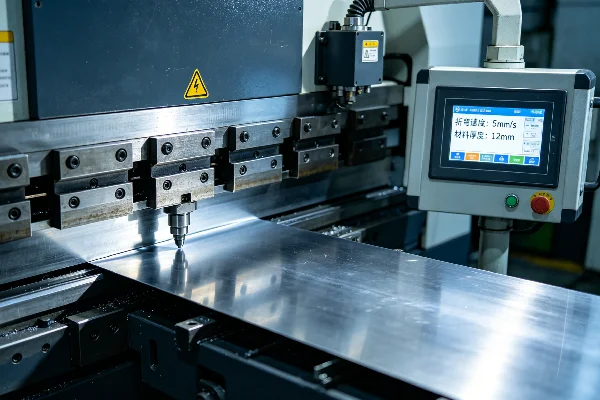
Bending speed must match material thickness. Thicker materials need slower speeds to prevent stress concentration and maintain material strength. For example, 3mm steel requires 30-50% slower speeds than 1mm steel.
Impact of Bending Speed on Different Materials
| Material Thickness | Recommended Speed | Potential Issues at High Speed |
|---|---|---|
| 0-2mm | 70-100% | Surface marks, minor deformation |
| 2-5mm | 40-70% | Stress concentration, strength loss |
| 5mm+ | 20-40% | Major deformation, structural failure |
We've learned to adjust speeds based on not just thickness but also material type. Stainless steel, for example, requires about 20% slower speeds than mild steel due to its higher strength. In our facility, we now use protective sleeves for bending round bars over 10mm diameter to prevent deformation.
For critical bends, we often perform test runs on scrap material first. This helps us dial in the perfect speed setting before running production batches. We've found that investing time in speed optimization reduces scrap rates by up to 40%.
What Role Do Tools Play In Metal Forming?
A customer once rejected an entire order because we used worn-out dies that left visible marks on their parts. That expensive lesson taught us to never compromise on tooling.
Proper tool selection and maintenance are crucial for quality metal forming. Tools must match material hardness, desired bend angle, and production volume. Well-maintained tools can improve part quality by up to 70%.
Tool Selection Guide
| Material Type | Recommended Tool Material | Tool Life (Approx.) |
|---|---|---|
| Mild Steel | D2 Tool Steel | 100,000 bends |
| Stainless Steel | M2 HSS | 50,000 bends |
| Aluminum | A2 Tool Steel | 150,000 bends |
We maintain detailed records of tool usage and wear patterns. This data helps us predict when tools need replacement before quality issues occur. Regular tool maintenance includes surface cleaning, lubrication, and alignment checks. We've found that proper tool care extends service life by 30-50%.
For specialized applications, we often design custom tools. While this requires initial investment, it pays off through improved part quality and reduced setup time. Custom tooling has helped us achieve tolerances as tight as ±0.1mm on complex bends.
How Do You Compensate For Springback?
Early in my career, I lost hours adjusting bend angles because I didn't account for springback properly. The parts looked perfect on the press but failed inspection after relaxing.
Springback compensation requires understanding material properties and stress-strain relationships. Overbending by 2-12 degrees, depending on material and thickness, typically achieves desired final angles.
Springback Compensation Factors
| Material Type | Typical Springback | Compensation Method |
|---|---|---|
| Mild Steel | 2-5° | Overbend + pressure hold |
| Stainless Steel | 4-8° | Progressive bending |
| Aluminum | 3-12° | Multiple step forming |
Our experience shows that springback varies not just by material, but also by bend radius and angle. We've developed a database of springback values for common materials and configurations. This data helps us achieve first-time accuracy rates above 95%.
For critical applications, we use digital angle gauges and vision systems to measure springback in real-time. This allows us to make immediate adjustments during production, reducing scrap and improving consistency.
Conclusion
Success in metal forming comes from understanding and controlling these core principles. With proper speed control, tool selection, and springback compensation, you can achieve consistent, high-quality results.