Many manufacturers struggle with choosing the right connection method for sheet metal parts. Wrong choices lead to structural failures, increased costs, and production delays. But there's a solution.
The five main sheet metal connection methods are welding, riveting, bolting/screwing, hemming/folding, and adhesive bonding. Each method has specific advantages and applications based on material type, load requirements, production volume, and maintenance needs.
I've worked with countless clients who faced challenges in selecting appropriate connection methods. Let me share what I've learned over 12 years in the industry to help you make better decisions.
What Makes Welding the Most Popular Connection Method?
Welding can be intimidating for newcomers to sheet metal fabrication. Many worry about warping, material strength loss, and achieving consistent quality. These are valid concerns.
Welding creates permanent, strong joints by melting and fusing materials together. Common types include spot welding, MIG welding, and TIG welding. It's ideal for steel and aluminum parts requiring high strength and water-tight seals.
In my experience, welding stands out for several key reasons. First, it creates joints as strong as the base material when done correctly. I've seen welded parts withstand incredible stress without failing. Second, it's highly versatile - we can weld different shapes, thicknesses, and even dissimilar metals with proper technique. However, welding does have limitations:
Key Considerations for Welding:
- Material compatibility (not all metals can be welded together)
- Heat effects on material properties
- Required skill level and equipment costs
- Post-weld finishing needs
Common Applications:
- Structural frameworks
- Pressure vessels
- Automotive components
Why Choose Riveting for Your Sheet Metal Assembly?
I often see clients overlooking riveting as a connection option. They worry about joint strength and assembly time. Yet riveting can be the perfect solution in many cases.
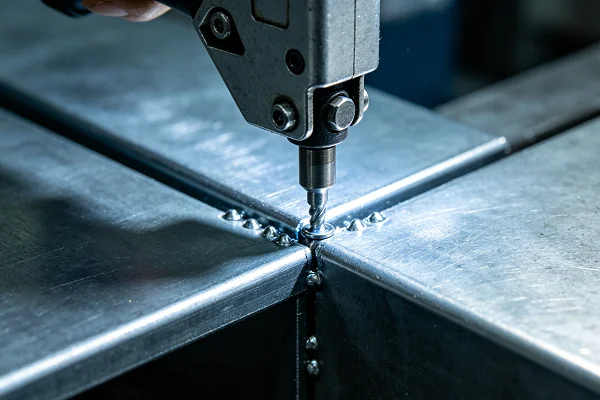
Riveting is a mechanical fastening method using deformable metal pins (rivets) to join materials. It works well for dissimilar materials, requires no heat, and provides consistent joint strength. Ideal for applications where welding isn't practical.
Having overseen countless riveting projects, I can confirm its effectiveness when properly applied. The key lies in understanding the different rivet types and their applications. Here's what makes riveting particularly valuable:
Rivet Selection Criteria:
- Solid rivets: Highest strength, aerospace applications
- Blind rivets: Easy installation, one-side access
- Semi-tubular rivets: Fast assembly, moderate loads
- Drive rivets: Quick installation, light duty use
The beauty of riveting lies in its predictability and repeatability. Unlike welding, which requires significant skill and can vary in quality, riveting produces consistent results when proper procedures are followed.
Is Bolting/Screwing the Most Versatile Connection Method?
Many clients ask me about using bolts and screws, concerned about their reliability for sheet metal connections. These doubts often stem from past failures due to improper implementation.
Bolted and screwed connections offer easy assembly/disassembly, standardized components, and no special equipment requirements. They're excellent for parts requiring maintenance access or future modifications.
Through years of manufacturing experience, I've found bolted connections to be incredibly versatile. The key is proper design and implementation. Consider these factors:
Critical Design Elements:
- Bolt size and grade selection
- Torque specifications
- Thread engagement length
- Load distribution patterns
Application Considerations:
- Maintenance requirements
- Load types (static vs. dynamic)
- Environmental conditions
- Assembly/disassembly frequency
How Does Hemming/Folding Create Strong Edges and Joints?
When I first encountered hemming in sheet metal work, I was skeptical about its strength. But time and experience have shown me its remarkable capabilities when properly executed.
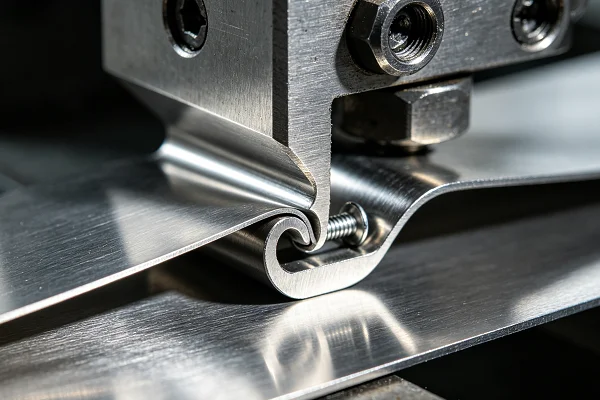
Hemming and folding create strong connections by bending metal back onto itself or another piece. This method requires no additional fasteners, reduces sharp edges, and can improve both strength and appearance.
I've seen hemming transform simple sheet metal parts into sophisticated components. The process involves careful planning and precise execution. Here's what makes it special:
Types of Hems:
- Open hems
- Closed hems
- Teardrop hems
- Double hems
Each type serves specific purposes and offers unique advantages. The key is matching the hem type to your application requirements.
Why Consider Adhesive Bonding for Modern Applications?
Traditional manufacturers often dismiss adhesive bonding, viewing it as inferior to mechanical fastening. This misconception costs them opportunities for innovation and improvement.
Modern structural adhesives can create joints stronger than the base material, distribute stress evenly, and join dissimilar materials. They also provide excellent sealing properties and clean appearance.
Having worked with various bonding solutions, I've seen remarkable results when adhesives are properly specified and applied. The technology has advanced significantly, offering solutions for challenging applications:
Adhesive Selection Factors:
- Surface preparation requirements
- Cure time and conditions
- Temperature resistance
- Chemical resistance
- Cost considerations
Best Applications:
- Thin material joining
- Dissimilar material bonding
- Large surface area connections
- Vibration dampening needs
Conclusion
Choose your connection method based on material properties, load requirements, production volume, and maintenance needs. Consider combining methods for optimal results. Success lies in understanding each method's strengths and limitations.