Sheet metal stamping seems simple, but poor design choices can lead to costly production issues and quality defects. I've seen many projects fail due to overlooking basic design principles.
For successful sheet metal stamping, maintain draft angles of at least 5° on each side, ensure minimum inner radius of 1.5 times material thickness, and avoid sharp corners by using radius of at least 0.8mm. These guidelines prevent part defects and tool damage.
After 12 years in metal stamping manufacturing, I've learned that process integration requires careful attention to several critical aspects. Let me share the key design principles that can make or break your stamping project.
How Do Draft Angles Impact Part Removal and Quality?
Every stamping manufacturer dreads parts getting stuck in the die. Without proper draft angles, you'll face production delays and tool damage that could have been easily prevented.
Draft angles should be minimum 5° on each side (total 10°) for successful part removal. For deep drawn parts, increase the angle gradually with depth. While 90° flanges are possible, ensure other surfaces allow smooth ejection.
When designing stamped parts, draft angles play a crucial role in both manufacturability and final quality. Here's why they matter so much:
Impact on Manufacturing Process
- Tool Life
- Proper draft reduces wear on die surfaces
- Minimizes friction during part ejection
- Extends maintenance intervals
Design Considerations
-
Depth vs. Angle Relationship
- Shallow parts (< 25mm): 5° minimum draft
- Medium depth (25-50mm): 7° recommended
- Deep draws (> 50mm): 10° or more needed
-
Special Cases
- Vertical flanges possible but require:
- Reinforced tool design
- Enhanced lubrication
- Careful material selection
- Vertical flanges possible but require:
I once worked with a client who insisted on minimal draft angles to maintain tight tolerances. The result? Frequent production stops and excessive tool wear. After adjusting to proper draft angles, productivity improved by 40%.
What Role Do Corner Radii Play in Stamping Success?
Sharp corners in stamped parts are like ticking time bombs. They concentrate stress, accelerate tool wear, and often lead to part cracking - I've seen this happen countless times.
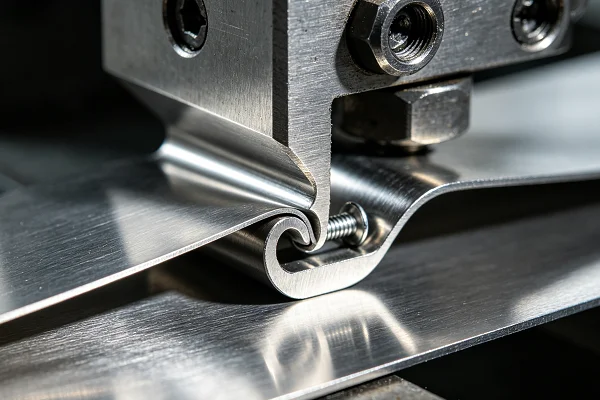
Inner corner radii should be at least 1.5 times material thickness, with 5mm or greater for deep drawn features. For bends, maintain minimum R3 radius. All sharp corners need at least 0.8mm radius for tool protection.
Corner radius design requires balancing multiple factors that affect both manufacturing feasibility and part performance:
Material Considerations
- Thickness Impact
- Thin materials (< 1mm): Minimum radius = 1.5t
- Medium gauge (1-3mm): Minimum radius = 2t
- Thick materials (> 3mm): Minimum radius = 2.5t
Application-Specific Requirements
-
Structural Applications
- Higher radii for better stress distribution
- Typically 2-3 times minimum recommendations
- Enhanced fatigue resistance
-
Cosmetic Parts
- Balance between appearance and manufacturability
- Consider secondary finishing operations
- May require compound radius designs
Through years of experience, I've found that investing time in proper radius design pays off tremendously in reduced tool maintenance and improved part quality. One automotive project saw defect rates drop from 5% to under 0.5% simply by optimizing corner radii.
Conclusion
Successful sheet metal stamping relies on proper draft angles and corner radii. Following these design principles ensures efficient production, longer tool life, and higher quality parts.